

When Fleets Develop a Negative Reputation, It’s Nearly Impossible to Overcome
In this month’s Recruiting Roundup, we look at why negative perceptions can linger long after changes are made, what drivers actually pay attention to when evaluating fleets, and why reputation may be one of the biggest recruiting advantages—or obstacles—a fleet can face.
We cover: why reputations stick, how drivers evaluate fleets, and what fleets can do to rebuild trust.
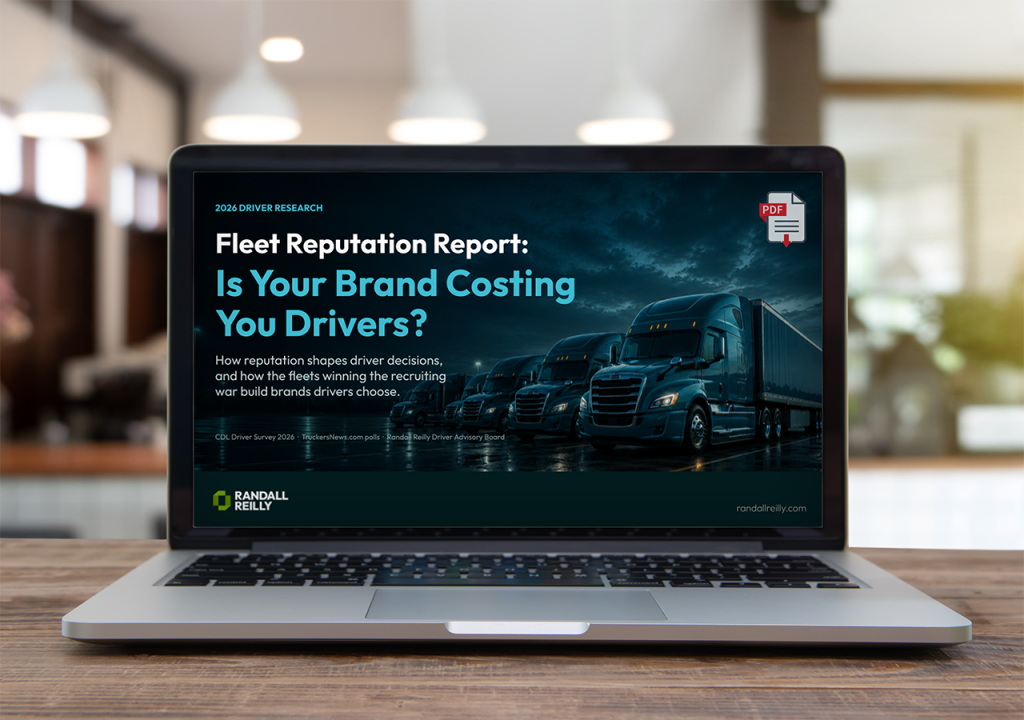
Get Your Copy of the Driver Survey Data
What’s Inside the Report?
- Why reputation now outranks pay — for the first time in 15 years
- How 62% of drivers build a shortlist before they ever search
- Why 76% walked away after one bad recruiter interaction
- What it actually takes to recover a damaged reputation
Want your copy of all the data? Click here to download the Fleet Reputation Report.
Join the Digging Deeper Live Discussion
Full Episode Transcript
When fleets struggle to get the drivers they need, their first reaction is often to throw more money at overall pay or sign-on bonuses. But the truth is, if you're having trouble getting drivers, the problem may not be your pay or your marketing at all.
Pay, bonuses, marketing, messaging, all of that stuff absolutely matters. But if this is a consistent issue for you, it may be something even more fundamental: your reputation among drivers.
Your fleet's reputation is critical. It takes time to build a strong reputation, and it can be incredibly difficult to recover from a bad one.
And that's a huge deal, because when drivers start looking for jobs, many of them already have opinions formed before they ever even speak to a recruiter.
When we asked drivers about their job search habits, more than 60% said they already have fleets in mind when they begin searching, and nearly 16% said they only apply to specific companies altogether.
So if you happen to be one of those fleets they don't think too highly of, no amount of advertising or sign-on pay may be enough to overcome that obstacle.
Fleets often approach recruiting as if they're starting with a blank slate, but that's just not the case. Drivers are walking into the process with preconceived opinions about certain fleets, both good and bad.
Those opinions can come from previous experience, conversations with other drivers, social media, online groups, or just things they've heard over time.
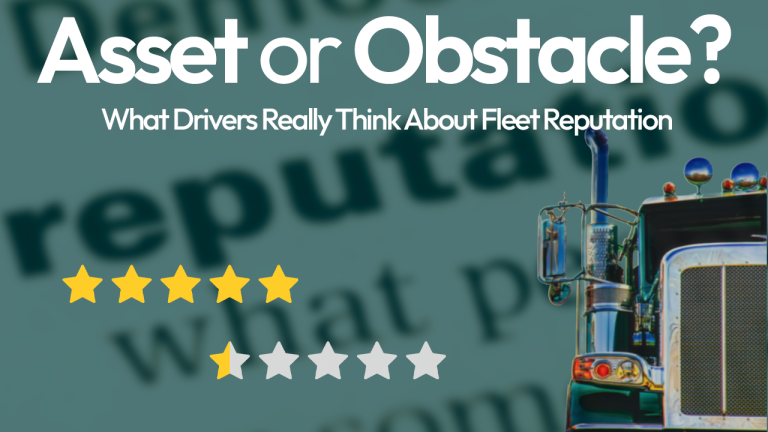
That means your reputation is either an asset or an obstacle before your recruiting process even begins. And if a company does develop a bad reputation, fixing it may be much harder than simply increasing ad spend or pay rates.
Consider this: when we asked drivers what matters most when choosing a fleet, reputation for driver treatment ranked higher than pay, with nearly 43% citing it as the top factor.
Better pay and sign-on bonuses, while still important, came in at 29%.
So just take a moment and think about that. Reputation for driver treatment mattered more than anything else. Not bonuses. Not benefits. Not home time. Driver treatment.
And that says a lot about what drivers are really evaluating during their job search process, because most drivers expect companies to advertise good pay and strong opportunities. But reputation can't be bought.
It's built through experience. It's built through communication. It's built through whether expectations match reality once a driver actually engages with and works for a company.
I'm talking about things like long hold times, missed calls, poor communication, recruiters disappearing mid-process, promising one experience but delivering something else entirely.
Drivers remember those experiences. And once a bad reputation is established and spreads, it becomes incredibly difficult to reverse.
This is illustrated perfectly with another survey question. We asked drivers what would convince them to give a company with a bad reputation another shot.
Nearly 58% said hearing directly from other drivers that the company had improved would be the biggest factor in getting them to take a chance on the fleet.
Only a small percentage said that better pay would convince them to do that, and even fewer pointed to online reviews or recruiter conversations.
And worst of all, nearly 30% said nothing would change their mind at all. For those fleets, almost a third of drivers may never consider them again.
That's a pretty stark reminder that recruiting reputation is not built through marketing alone. It's built through real interactions and real experiences over time.
So for fleets trying to improve recruiting results, the most important question shouldn't be, “How do we attract drivers?” It should be, “What kind of experience are drivers having once they engage with us?”
Because by the time drivers begin searching, your reputation may already be influencing whether they even consider your company in the first place.
If you want to dig deeper into this topic, keep an eye out for this month's full download and our upcoming Digging Deeper discussion, where we'll continue looking at how communication, recruiting experience, and reputation all shape driver behavior long before an application is ever submitted.
The download includes all of the data we covered today and a lot more. I'll also leave a link below to be notified when registration opens for the next Digging Deeper, where you can join the conversation live.
And if you haven't checked it out yet, our latest Recruitment Roadmap LinkedIn newsletter article also explores this topic in more detail, and it's available right now.
We'll be back next month to talk more about AI, but this time we're going to be looking at things from the fleet's perspective. We'll look forward to having you join us. And until then, thanks for watching the Recruiting Roundup.