

AI is Everywhere, But How Are Fleets Utilizing it?
We’ll dig into new survey data on AI use across the trucking industry, including:
- Where fleets are currently using AI
- Which applications are producing results
- What tools fleets are using
- The biggest barriers to greater adoption
- How fleet attitudes toward AI compare with driver attitudes
- What the findings could tell us about where AI adoption goes next
Get Your Copy of the Fleet AI Report
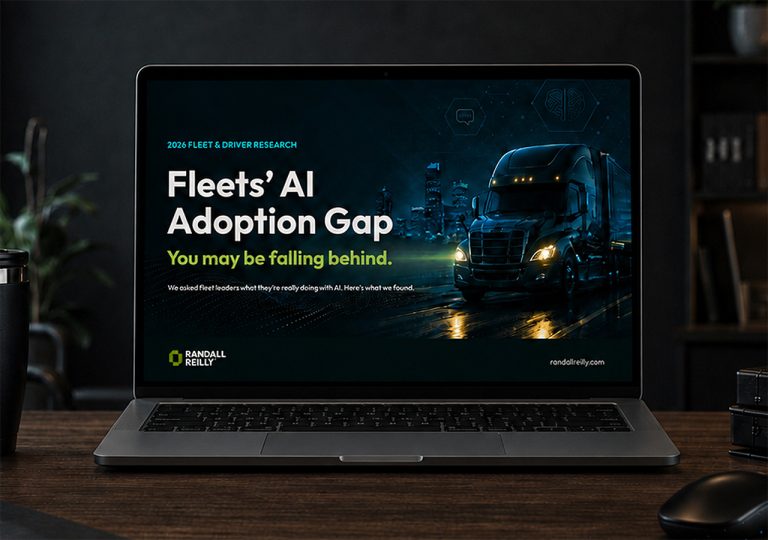
What’s inside?
- 30% of fleets aren’t using AI anywhere
- Recruiting has the best ROI of any category tested so far
- Nearly 60% of fleets say their biggest AI obstacle is their own team
- And much more …
Never Miss a Digging Deeper Discussion
Don’t miss your opportunity to share your thoughts and help steer the chat. Digging Deeper is back every month with a new topic. Dave and his panel will discuss the issues and field any questions our viewers may have. If you want to join us and become part of the discussion you can sign up to be notified when the registration for our next Digging Deeper opens up.
We look forward to you joining and playing an active role in the show!
Full Episode Transcript
Hello, everyone. Welcome to Digging Deeper. This is a live edition as they are all now, but also we have no video today. Today's a little bit different. We're going to be talking about just AI in general hot topic. Apparently we're going to talk about just how different fleets are using it. We just produced a report where we surveyed a lot of our fleet clients to understand not only just recruiting, which is obviously where we'll spend a lot of the conversation, but just how across the entire business fleets are using AI. We're going to really need your help today. So if you are in the chat, we really want this to feel more like a roundtable discussion.
Anything of interest that you want to ask or even things you want us to talk about, or anything you want to add to the conversation, feel free to put it into the live chat. And if you're a little bashful, feel free to put it into the Q&A, as the live chat is obviously live and people can see who you are. But if you have something you don't want your name on, feel free to put it into the Q&A. We have a guest from Werner that will be joining us shortly, I think. Her name is Kate Daly. She is the head of product there.
Was that her title? Josh? Head of product. Okay. And do we have confirmation from our from our guests that everything's working and everybody can hear us? Fine. Everything hunky dory. Don't want to continue. Okay. We're all good. All right. I will go ahead and introduce my co-host today. It's Kyle Jernigan. You guys all know Kyle. Kyle, what's your official title now? Solutions architect. So it's nice to be here today and let's have some fun. You know, I always wanted to be an architect. You're really good at building stuff, so that makes sense. Anyway, let's start by running a quick poll.
We're going to launch this according to our research. Kate's with us. Let's add her to. Is Kate on stage with us yet? There we are. Okay. Let me. Can you hear me? Yeah, I can hear you. Nice to meet you, Kate. Good morning. How's everyone doing? We're doing well. This. I'm David. I'm the VP of marketing. This is Kyle Jernigan, our solutions architect. And we're very happy to have you. Everybody, let me go ahead before I launch into what I was going to say. This is, why don't you introduce yourself to the audience real quick? Okay. Yeah. You bet. So good morning.
My name is Kate Daly. I'm the director of product here at Werner. Nice to meet you all. Nice to meet you, Kate. Can you go into a little bit more of what your role is at Werner and how that interacts with AI? Absolutely. So my job, my role is to really leverage the gap between it and our business teams, making sure that we're delivering really good value on all of the products that we're working on, listening to the business, working through what those pain points are. And then obviously, this new thing, AI came up a couple of years ago. So we're just trying to work through how AI can make their lives a little bit easier in our recruiting team.
We went through a big digital transformation a couple of years ago, so we were prime for AI coming in. On top of that, we had just I always talk about if you've touched a process recently and you've modernized it, it's really easy for AI to come in on top of that because you know what the KPIs are. You know what the data points are. You know what the process is inside and out. So this was prime for us, looking at some AI tools for us to be able to help that team. And with our current market, with hiring drivers, this is more important than ever that we give that quality time back to our business teams, our recruiters, our managers and everything in that space to making sure that we're maximizing what we're spending from a marketing perspective, what we're spending from a tool perspective so that we can hire these drivers.
So yeah, that's what what was the when as you onboard and bring in new tools, especially AI tools, what is the how is that process been as far as onboarding? I assume there's got to be a little bit of skepticism in there. Oh for sure. And that's that's the right approach, right? Any new technology that you're looking at, you should be skeptic about what you're doing. Right. Can you prove this out? Does this work? Can you trust it? Is this going to disrupt the flow that we know our human team, but our recruiters are maximizing, right. We don't want to disrupt that.
We want to be able to help them with it. So we approach this really carefully. We did a lot of POCs in the beginning to say, hey, does this work? One of the big items that we delivered was an after hours receptionist, where we said, we know no one's going to answer these calls. So our risk was quite small with that. So we said, let's put that after hours. Let's see what we get. What quality do we get? What questions are being asked? Does the agent perform the way that we need the agent to perform is asking the right questions.
Does it get lost, that type of thing. And look, it took it took some working as it should. And any AI. I just sent an email earlier this morning to another leader in the organization. I said, look, you don't set it and forget it. You've got to look after that. The way that you would look after your human team, right? You're monitoring them. You're looking to say, you know, is the agent performing is the what's the what's the response like from the person calling into that agent? This is a voice agent that we have right now. Is it responding correctly and are we monitoring and make sure that's the best experience for that person calling in, as well as that person that's going to pick up that data later on.
So that constant monitoring needed to happen. So we had a low risk right tool that we used first we went live with that. We proved that out. And then collectively we said okay do we want to put this on our business. Our receptionist. And we said yes, we had a few more tweaks that we needed to kind of implement, but that worked really well and that allowed us to test the waters, make sure things are working and performing the way that they needed to before kind of, you know, really coming in full throttle on the front end. Okay. I saw Kyle's eyebrows go up.
Kyle, do you have a follow up to that? No, I was it's just great to hear kind of the way you guys tackled it. You kind of said, what's an area where we may gain an efficiency? Yeah, it wasn't necessarily, you know, coming in guns blazing some big tech stock, super expensive, promising the world to, you know, replace everybody's job with a robot. You said, hold on a minute. Let's see how we can just take the first easy step and be more efficient. And then I think the other part that you kind of touched on, and you said the big scary R-word, that a lot of people in that research that David kind of mentioned earlier, there's the risk, like, what's the risk of trying something new?
And if it's high or low, you definitely want to see, how can I test the waters? Yeah. What's something that could just make my team a little bit more efficient. So they're either going to be, you know, better in their role, faster in their role, like their job better quality of life improvement, things like that. And I think some people in our industry in particular have looked at AI as if it's got to be this big technology overhaul. And I think what I'm hearing from you, even from, you know, a business with the expanse of Werner Enterprises, it doesn't have to be that way.
It can be, you know, what's something tangible that could help, you know, an important process without a big, scary, risky, you know, proposition or something like that. So that was why I was kind of my eyebrows are kind of up and hearing after hours inbound calls getting answered is right in my wheelhouse as well. So that was that was really exciting. Thank you. That's what I had. David. Well, let me ask you this. Okay. Hey, just as an aside, are people starting to use AI as a verb yet where they're like, let's just ai it? Yeah, yeah, I mean, nuts, I can't stand that for some reason.
I know I'm not signed in your in your office that says can we ai it. Yeah, yeah. Those t shirts with AI that. Yeah. Yeah. We're not we're not using it as a verb. I mean to me it's another solution, right, to something that we'll be working on. You know, we're in the middle of a big digital transformation across all of our tech stack, not just our recruiting world. This feels like another tool that's part of that. Right? And AI kind of is a scary word right now. Like compared to like going back 18 months ago when it was the hot thing off the block.
So you know, right. It's just another tool. Right. Which was recruiting the first area across the business that you guys started to implement it heavily. We went everywhere. We've gone everywhere with it. It wasn't the first one. It's the one that I was most connected to because we had just touched the process and I was like, hey, this is like prime for us. Being able to put something in there. Like I mentioned earlier, we had just worked through that process, really streamlined it with some efficiencies on the telephony and the actual workflow itself or how we on board. What questions do we ask?
We were very right about the order that we do things in, as we all do in this world. So we knew, hey, there's some keep areas in there that are prime for us. And the receptionist was one of them. One of the others was the callback. Right where we're reminding the driver, hey, you're starting on Monday at 9:00. These are the things that you need to bring. That was where we said, hey, let's keep the recruiters on the phone. Let's keep them closing. Let's keep them talking to active drivers. This is something that's easy. It's repeatable. Right. And very much time for either an email agent or a voice agent or text.
You know, you can whatever omnichannel that you want to go down. We said that's an easy area for us to kind of prime into. But you know, we've got AI deployed across the entire organization. It's in every workflow, whether that be working with customers, working with our third party carriers. We've got a ton going on in our teams right now with AI, as well as myself as an office worker using Gemini and all of the things and everything. So it's everywhere at Werner, which is kind of interesting. I want to connect to David, I want to yeah. Go ahead. Kate, I wanted to ask what were some you mentioned it kind of the key pain points that you guys and you can go in the last month or even 18 months just so that some other, other people here, you know, they don't feel alone.
What were some of those key pain points you guys said, you know, this is where we think some sort of AI solution could help. Let's start exploring here. I was just wondering what some of those pain points might have been for you guys. Yeah. I mean, look, we're trucking, right? Trucking is a difficult industry. It's being neglected from a technology perspective for a really long time. We saw what happened in 2020. So there's been a lot of attention right over the last few years. And with AI, the blood explosion, all these companies are coming in saying, hey, we can automate that, we can automate that.
And just like any big company, we've got problems. And, you know, I'd for days right off things that we could do to automate. So obviously recruiting was a big part of this. But honing in on key areas, whether that be email responses where we're just constantly sending the same email over and over again, whether that to be a customer, reminding them about something or asking them for data. Those are prime areas where we feel like we've got rinse and repeat processes that are, number one, a big time suck. But number two, we want to make sure that we are being hot off the, you know, hot off the off the grill here to make sure that we're getting those responses either back to our customers or carriers.
We want to be responsive. You know Werner's got world class service. That is one of our deliverables that we have is a is an ethos. As an organization, we want to make sure that we're delivering really good service. And in transportation, that's to do with time primarily. So anything that we knew that we needed to respond quickly to, whether that be respond to a customer's email, build that load quick, get that order date changed, reply to that, recruit that applicant who's called us from a recruiting perspective, calling a carrier to make sure that we know that they're on time. Those are repeatable things that we do day in and day out that are that are amazing team do.
But we said, hey, can we augment them because things do happen. Things do go off the rails where you do need that human interaction, and we don't want to disrupt that and we want to continue that. We're maintaining it. But we said, hey, for the most part, are there time suck tasks that happen here that we can allow our human team to have that time back so they can spend the time either analyzing that data and figuring out what can we do better, or working with more complex tasks. And that's not like a fluff statement. We have more complex things that we need our humans to work on.
And we said, hey, how can we give them that time back so that this stuff is just kind of rolling around through managing exceptions or managing analysis of that data, and they're being a little bit more empowered as opposed to just being task orientated. And David, I'll ask one quick follow up, maybe somewhat of a comment, and then I'll give it back to you. What I've also heard is exactly what you're saying from some other fleets. They may not initially necessarily be as as big of a operation as Werner, but what they said, okay, they kind of got this side of relief.
They said, okay, now my people can talk to people a little bit more because my people aren't having to do these tasks as much or as often. And I was like, oh, okay. And asked him, tell me about. They said, we're having more conversations with the right person sooner. It could be in brokerage, it could be with a driver, it could be with safety, it could be anything. Because some just like you're talking about some of those, time suck tasks, they're critical. Like, I mean, I'm not I'm not saying you can't have them. Some of that stuff was able to be sped up and improved with some AI systems that were pretty simple, so that people could get back to helping people better at that business.
So that's what I got. Dave, I'm going to shut up now. No you're fine. I mean, it is digging deeper with Dave, but. And Kyle today. Just a quick, quick question, Kate. What's your preference as far as between ChatGPT Gemini? Claude, do you find use for all of them or do you have a preference for all of it? Yeah, I think they're all good. I mean, you got to you know, I first did I first was playing around with ChatGPT. I still have that on my personal phone. Do you want to pick it is shopping, lists, shopping. It's really good for that.
And then but Gemini we went live with Google last year as a company and right back like Gemini is a window open in everything that I'm doing. You know, whether I'm drafting a response to senior leadership or we're working on communications for any project that we're launching, whatever it is, it's invaluable for me in the role that I play. But our business teams are getting a lot out of that, too. Just the analysis. We spend a lot of time in spreadsheets. We love looking at data. That's that's our big thing to helping them analyze that data is really, really critical.
So we're watching the business teams kind of get, you know, faster their with their responses and their analysis of the data, which is really good. But Claude phenomenal. I mean we've got Claude developers right now. We've got Claude development agents that are building staff for us, which is really powerful. So, you know, I think they're all good and you got to keep using them. That's how they get better. So use them all. Well. How has it been? So maybe you could give some advice to people that are wanting to implement AI into any area of the business? What advice do you have as far as dealing with people that are skeptical of it, are hesitant in some capacity?
Yeah, I mean, we've got we've got some amazing change leaders at Werner who are advocating and pushing us to kind of do things a little bit differently, which is really helping. You know, we're not change avoidant from a leadership perspective, which makes our lives a lot easier when we want to try and do things. You definitely need that leadership buy in from the top, and that can be scary too. But we've got, you know, Derek Leathers and Dharma on my GTO, they're pushing us to try new things and get in, get in the weeds on new technology stuff helping. But it's that middle layer.
And how do you make sure that people are bought along with the process? That's our job and product is to make sure that we have people buying in, monitoring, helping us make this better, getting that feedback loop. But you've got to try it. And I've definitely we've definitely had areas where we've been like, I don't know if this is going to work. So being able to POC time box POC have clear visions of what you want to test out, what you want to validate, how you're going to look at those findings and then make a decision. Because not everything that we've done is worked out.
We've turned some agents off. We've turned some back on. I'm trying to get one agent turned up back on today where we had we turned it off over the summer just because we weren't seeing that traction. But based on some feedback with another agent, I'm like, you know what? We're going to revisit that and see if we can turn it back on. So we're constantly cycling through like, hey, what can we do here? And how can we make it better with the partnership that we have with the business teams? But it is scary, right? It is new, right? It's new tech.
It's, you know, trust it. That's probably the biggest thing. Like how do you trust it? You trust it by monitoring. Just like you trust your people, you know, to handle a phone call, conversation or handle that email message. With AI, we're seeing, you know, more accurate responses or the agent asking very deliberate questions so that we don't skip over something that we know is important. Like, we can really train that agent to do some of the things that if our humans are busy and tied up and and we're all doing two things at the same time, like no one's sitting here doing one thing right, you can get distracted.
You may miss something. We know that the agent will ask that question. So the quality of the data we're seeing improved, which is also helped by leadership in. But the other thing is go look at it like go test it, look at it, look at what some of the other teams are doing. We encourage our business teams to go cross each other and look and say, hey, what agent do you have? We just did a big event here a couple of weeks ago, and we showed a lot of agents, and naturally that developed a lot of a lot of communication back to us saying, hey, when can I get an agent?
Or hey, can I get AI? Which is great, we want to hear that. But, you know, share what you're doing is another thing, like what works and more importantly, what doesn't work, right? It may not work and you may need to try a different agent. So my advice try it. You might not like it, but you might. And if you do, goodness knows why. That will free up some time or some, you know, capacity for you with your business teams. Well, that's really good stuff and I bet the audience on that extremely helpful. Another quick question I'd want to ask, or maybe not that quick, but of all the different areas in the business, according to our survey, seemed like recruiting was having the most profound impact right off the bat and showing the highest ROI.
I was wondering if that would be the same for Werner. Are you seeing the biggest impact on recruiting? And then maybe could you give me two other areas of the business that are also having an impact, or you foresee it having a big impact? Yeah. Recruiting. I don't like putting the teams against each other, but in my head I kind of have to with which ones. Again, because we had modernized recruiting recently, it was easy for us to put AI that, and we're constantly looking at that and see what we can do more. We've got a call center solution that we're working on right now that we're going to front load with AI.
So recruiting is doing really well, and we've been able to deploy additional agents that are doing stuff that we just couldn't do, right. Our recruiters are on the phone all the time doing a phenomenal job of working with these applicants. That's them. Getting them map to a job that makes sense for them. We don't want to disrupt that. So with recruiting, what we've looked at is that's a fine tuned process. What can we do to augment that and make that even more efficient so that those recruiters are on the phone with people that fit our needs, have passed their qualification questions.
We've got positions available to them. One agent that we're doing right now is a locality agent. So we're actually asking the applicant, where are you at? Because that's a big thing. Like are you near somewhere that we have a job position available to you. Right. We don't have that. We don't really have logic for that on the front end. So we said if we can have an agent do that, that makes that conversation for the for the recruiter a little bit more substantive. Right. We know that they're located in this area. We know that we have these positions available. That conversation is a little bit tighter.
So whatever we can do to tweak, to tweak that and get that more and more accurate and more beneficial for those recruiters because, look, the leads are down. They are as an industry, less people are coming into wanting to drive. So when we do get somebody on the phone, we want to make that as a special conversation as we possibly can with as much data, right, and much as analysis. So it's more qualitative. It's probably the way to put it. But there's other areas in the business. You know, we were talking company. One of the biggest items that we get asked for is build my load.
Right. Can we get loads built that's manually done today? We have a phenomenal agent that we're working with right now to build those loads. Now that's taken some tweaking, that feedback that we got from the company that we use. They said, man, this is really complicated. How you build road, it's different by customer. It's different by data week. It's different by all of these different parameters. And training an agent, the way that you've trained a human team to do that is interesting and the way that we've worked that out. But that's that's absolutely showing us some big benefit. And I can't wait to see where that kind of nets out by the end of the year.
How many loads that's building week over week is a is a key KPI that we look at. And man, that's freeing up our time for that team who's building those loads manually and working through all that minutia with those customers. So that's working out really well. And then the other agent that is performing really well is appointment changes. Happens all the time. Hey, we can't do 4:00 and we do 9 a.m. tomorrow morning. That's a simple thing for us to be able to do, but you can imagine the orchestration on the back end of that, of changing schedule, changing the track, like, you know, you're thinking through all of those backend things.
So we have an agent building and managing all of those time changes. That's huge because that's not only operationally saving as time and getting that sorted out, but the customer service impact is a really big vibe, and making sure that we're being timely in those responses to those customers, because obviously they have receivers and all of that stuff to kind of update on their side too. So that just shows the partnership that we have with those customers and how we've really gone after, like a really specific pain point. And we're delivering a phenomenal agent there. And that's that's surpassing what we thought, which is really good.
I really appreciate Kyle. Do you have any? I was going to ask her one kind of close up question, but if you have any questions you want to ask. Go ahead. Yeah, I was just going to say what I heard in all of that. And I hope everybody can kind of take away, you kind of and it's there's actually a quote about, about that in, in the research. Hope everybody has you're allowing your people to get in touch with more people. You know, if you have something getting rescheduled, like six different people probably on that one reschedule would normally have to do something, you know, between the shipper or the receiver or you guys and the driver or, you know, driver, manager or planner or something.
And if you can have a bunch of that, like you kind of said, minutia, it's a critical, important thing. But it's a lot of I call it like copy paste kind of activity. Okay, there's a little bit of problem solving in there. And if, if you can kind of solve that problem that's critical and real and let people get back to dealing with other people, then everybody one likes her job a little bit more, but they're also staying on task. They're going to be better and more efficient. And, you know, that's just what I'm hearing out of a lot of early adopters with AI and transportation is how can I get my people interacting with people more and just kind of letting that be kind of the first lens to look through, if you will.
Yeah. All right. Kate, if you could. And you've been great. Really. I'm sure we're gonna have great reviews from this. Could you kind of give us the final word on just how you see adoption of AI going at fleets, and maybe some things to think about as we close up? Yeah, absolutely. Look, you've got to you got to try it. You've got to in in this world more than ever. There's it doesn't stop. Right. There's always work to be done. My advice is go ahead and try it. You might like it. So where we're going to be in the future?
I mean, it's interesting. I was meeting with a bunch of women last week and another AI meeting, and they're definitely seems to be some trepidation about what this was going to mean, right, to our jobs and everything like that. You will get left behind if you don't embrace it. And in the trucking industry, now more than ever, it's critical that you guys do look at your tech stack, figure out why you've got AI potential and start using it. I foresee us, you know, not using AI as a strategy anymore. It's part of what we do, right? It's not a it's not a word.
It's literally how we deliver. We always think about something from a solution perspective, like, hey, can we put an AI agent here? If we can't, we'll move on and come up with a workflow or code it or whatever we're going to do from a development perspective. But if we have an AI for strategy and how we're implementing it, that's definitely how we've kind of adjusted our team. And it's taking some it's taken some work, right? Not every system is primed for that. We're still in this transformation of moving off of legacy on prem systems into the cloud. But we know with our cloud systems and our cloud processes it's really easy.
But there's a lot of stuff that you can do without being in cloud systems as well. With AI, the voice agents alone are phenomenal, so I'm excited to see what we're going to be a year from now. We've got to get a lot of these projects, like cooking with gas is what my boss would probably say, like more customers, more processes, more loads, whatever it is, whatever we can do to kind of push it because we're getting that time back, we're getting more meaningful engagements with the people that we need to have conversations with, and it's making it better as a company.
So I'm fully bought in to the AI, if that's what we're going to continue to call it. I think we should come up with a new name, but I'm excited to see why we're going to be a year from now. And looking at our compadres across the industry, you know, talking to them and talking to, you know, those those other folks, everyone's doing it and trying it. But I'm really proud of what Werner has done so far with that. Well, I really appreciate it. That was wonderful. Okay. That was really helpful for us. That is it for today's episode. As always, we will have it up on YouTube and the rain probably tomorrow.
I had to look at my Jamie behind the camera there and. But that was wonderful. Once again, thank you for joining us and thank you to everyone that watched us live. You can see the recording later this week. Appreciate everybody. We'll see you next week on our next month, next month on Digging Deeper. Thanks for having me. Take care. Yeah. Thanks,
Explore More Topics with Digging Deeper
Digging Deeper
41:50
28:34
46:19

28:39