

What's Really Haunting Your Recruiting Pipeline?
On today’s Digging Deeper
Dave and his guest, Dustin Worley, talk about drivers and why they ghost fleets. They dive into the data and go over what we found with out latest research.
• What makes drivers ghost a fleet?
• What can fleets do to stop ghosting?
We’ll talk it out on today’s edition of Digging Deeper.
Get Your Copy of the Ghosting Data
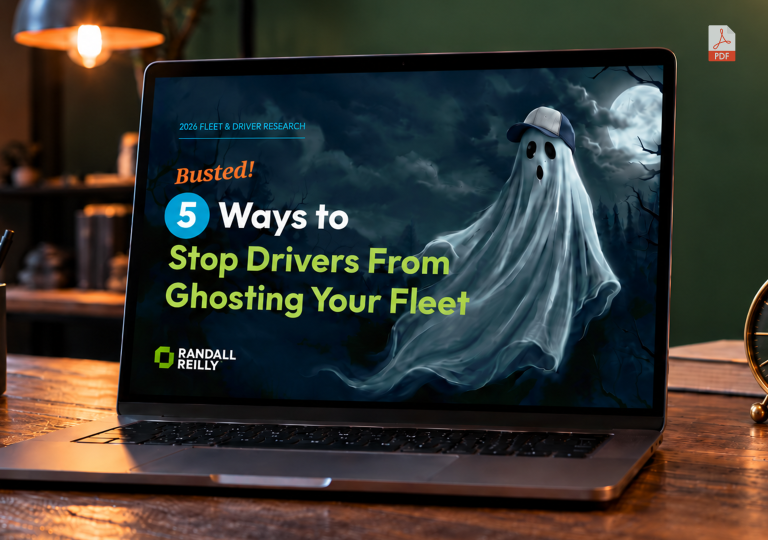
What did we find?
- 48.4% say vague or missing details are what make them skeptical of a job ad or recruiter
- 39% say recruiters who sound scripted are the most frustrating part of the hiring process
- 83% have quit a job, on the spot or soon after, because of how orientation went
- And much more …
Never Miss a Digging Deeper Discussion
Don’t miss your opportunity to share your thoughts and help steer the chat. Digging Deeper is back every month with a new topic. Dave and his panel will discuss the issues and field any questions our viewers may have. If you want to join us and become part of the discussion you can sign up to be notified when the registration for our next Digging Deeper opens up.
We look forward to you joining and playing an active role in the show!
Full Episode Transcript
58% of drivers who search for a job this year admitted to backing out of one after already saying yes. That's a staggering number. But here's the bigger question why are drivers ghosting fleets in the first place? Randall Riley dug into the research, and what we found might surprise you. More than a third of drivers who ghost disappear before they've even agreed to take the job.
And 83% of drivers say they've quit a job because of how orientation went. So what's happening between the first recruiting call and getting a driver behind the wheel? It turns out ghosting isn't always about a better offer or higher pay. Sometimes it's about broken trust, poor communication, or expectations that don't match reality. And there are some surprisingly simple things fleets can do to fix it.
And this episode of Digging Deeper. We're breaking down five research backed ways to stop drivers from ghosting your fleet. Watch the full episode to see what the data reveals. Dustin, you got us. So I thought we were wearing costumes. I canceled that my sauna got that memo.
Can you give us a belt? I don't think you could sit down.
Take that thing. Sorry I didn't do costumes this year. Welcome, everybody, to our special edition Halloween. Digging deeper. We're live. The chat is open. We're on a scary topic today of driver ghosting. We confirmed that we're all good over there. Okay. Sorry, Dustin. I thought you got the memo. We weren't wearing costumes. Now you're probably seen it in slack, so I didn't check it.
I was gonna see it. Well, maybe you need to start checking slack. These things won't happen. Let's see here. So if this is your first time on Digging Deeper, we have a topic that we're going to discuss. It's all based off of the open little monologue that you heard from me. We're going to talk about ghosting.
We're going to talk about five ways you can stop people from ghosting. But throughout this entire webinar, the live chat is open. Feel free if you want to stop us. If you want to boost, you want to say something's wrong. Something right, give us a thumbs up. Whatever you want to do, feel free to ask your questions.
Put in your input, whatever you think. You probably have some info and some ideas that will help people. You don't think of this as a as a, networking opportunity, a roundtable of sorts. But if you have a question, you're a little shy and you don't want to ask in the group where everyone can see and be anonymous, you can use the, Q&A portion of the panel.
I will still ask the question. I just won't share it to the audience that you asked it. But I think with that being said, let's go ahead and begin. We're talking about ghosting, specifically driver ghosting. Let's go ahead. Before we get going, let's throw some stats. This says 58. According to our data, 58% of drivers who have already said yes to a job at a fleet have backed out after saying yes.
So the majority of drivers, according to our data, have ghosted at some point. So let's define what we say ghosting is. I'm going to run some some polls real quick. So why don't you start dusting and say what you define as ghosting? I would define ghosting. As you know, they ask you to send them an application or ask them, you know.
Yeah, go ahead and send me the application. And they never speak to you again. Or they even maybe commit to orientation and they know show to orientation. So just somewhere within that process of the recruiter thought that they had a driver on the hook. And then, you know, all of a sudden, no communication whatsoever. Yeah. And I think I think that's pretty good.
We're going to kind of define ghosting as a basically I like the way you said it, the the drivers expressed interest or in some way given a verbal indication that they're interested in the job. And then at some point, somewhere between first contact and orientation, they're just completely, gone and you don't ever hear from them again. Yeah.
So that would be the, the, the definition of ghosting. Some reason someone's calling me, and of cording to our audience, I'm going to go ahead and look at this. We've had 14 votes so far. 85% of people that have voted say yes. Ghosting is a big issue for them. Another 14% have said it's a little issue.
It's an issue, but not a huge, huge issue. So far, nobody has said no, that it's not an issue at all for them. So this is an issue that runs across all fleets. I would say. All right. Let's talk about let's go ahead and talk about, ways in which we can prevent ghosting. And I think kind of the first place to start of where you would where where you start to go wrong, that causes drivers and let me back up and say, some of it is just drivers, ghosts.
Like, you can't 100% solve this issue, that you can't fix human nature. But there are some things you can do to somewhat mitigate the issue. We already got the chat going. Let's go ahead and talk about it.
Oh good question. We're going to talk more specifically about orientation, Shelly. But let's go ahead and look at what Shelly has to say. She says any ideas to uncover if a driver has decided during orientation he will be looking for another job. So during orientation. Orientation. Have you ever heard of that? Where they're in orientation, they're like, this isn't for me.
I will give you a stat really quick, Shelly, that just confirms that this is an issue 83% of drivers. This is probably one of the more astounding statistics that I've ever heard in driver recruiting. 83% of drivers have decided they were going to quit a job during orientation. So just from the orientation alone, they're like, I, I don't know, I don't think this is the job for me.
So how can you is there any way to really uncover if a driver is starting to feel like, this fleet isn't for me during orientation? I mean, just making sure that, you know, maybe you had them sign some document or go over the document with them before they even get to orientation. So they make sure they know the what the full scope of the job is.
Because if you describe one job and then they get the orientation and then a driver manager or a safety person is actually like, well, actually you're going to be doing this, this and this, then they may decide, you know, hey, this isn't what I signed up for. So I think it depends on what is your process there. Right.
And what is communication from recruiter to whatever's being said and oriented. So that's exactly and we'll get into this more because this is one of the big points. So I don't want to completely give it away Shelly here. But one of the big things is might be hard to, to 100% uncover what's going on in their mind during orientation.
You know, you could look to see if they're unengaged or not. But the biggest reason is probably because expectations don't match reality. So something and that isn't necessarily have to be a negative thing. That doesn't necessarily have to be a negative thing. Like someone's purposely being misleading, but, somewhere along the line, what they expected is not what they got when they showed up to orientation.
So. That's right. So, you know, reviewing your process to see like what a recruiter is saying, what are the expectations that are coming in with having written confirmation of what you're expecting, all that sort of thing. Yeah. That, that's going to go a long way into making that number much lower. People who show up to orientation.
Yeah. But let's let's jump back and feel free to keep putting it in the chat. We'll jump all around. Does it have to be linear in any way? All right, here we go. I method number one, to making sure to try and to mitigate the ghosting issue is what we're saying. Train the recruiters on the job and not necessarily the pitch.
So what that means is that the recruiters, instead of just being order takers, which I believe is a phrase you talked about, recruiters can't be order takers and say like, here's the feature benefits. I'm going to give them to you. You say yes or no. The the recruiter needs to act almost more like a consultant. He needs to be extremely knowledgeable on the job so that he can almost feel like he's an ally of the of the of the driver that he's talking to.
Would you agree? Yeah, absolutely. I think the recruiters, you know, also just everyone in the organization really, like, have the driver confirm, like, what did they like about what you just said? If they can't tell you, if they can't repeat back what they like about the job, then that driver was either just not paying attention or wasn't engaged in the conversation and was just saying yep yep yep yep yes in me.
The application, which they probably did for 5 or 6 other carriers because trust me, they're not just talking to you. They are shopping around seeing who can offer them the best job. So I you know, if from a recruiting standpoint, the recruiter should be definitely asking that question, hey, tell me, tell me what you most like about this, this job opportunity.
If the driver can't, you know, repeat back anything, right? Trust me, you don't have that driver on the hook, but yet you put them in sin application status. Then they ghost you. Right? You know another thing that, this would be a sales tech technique that I've heard. Seth Becker talk about and I've heard Scott Montana to talk about is one thing that you need to make sure that we ask about as a recruiter is what about your last job is making you look for new jobs?
What did you you went to? And they call that uncovering the motivation of the call. So if you can uncover the motivation of why that driver is calling now, when you list features and benefits and what's good about your fleet, you can actually align those to the pain points of the driver. I do want to jump back to the orientation thing real quick because our Zach, the stat guy over there, we thought about next season we're going to have a camera on Zach the stack guy next.
However, so on the orientation, we we did run some research on orientation. And what are the most common red flags that drivers see at orientation. So I'm going to give these in order of importance. I'm going to give you the top three. Because they were kind of the main movers here. No real explanation of pay during orientation was a big one.
That was the number one reason. 32%, 27% said this. The whole orientation felt disorganized. There wasn't a good schedule. There was poor communication throughout. That was a big issue. And then the final and I've heard Maldonado talk about this a bunch bad amenities. So like bad hotel, bad meals, bad seating, just not feeling like they were going to get taken care of based off of the amenities throughout the process.
Yeah, I'm going to jump back now. This is getting all over the place, but I like it. All right, let's jump back. We're going to jump back. I'm going to give you ate I stole this from you sack sack guy. So we talk about understanding the role and knowing the company is a key component of being able to address the drivers in a way that they feel bought into the job and not like they just got a role described to them.
And then there was no real by in throughout. So everybody gets them to write these down with. Or you can go back and watch the recording but get something to write these down with. All right. These are eight questions that every recruiter should be able to answer on a call if asked. All right. How many miles does a driver average per week.
What's the average weekly pay? Also, what is the average annual pay. How long is orientation and where is it? How much is the sign on bonus and how quickly is it paid out? What's the current retention bonus? When do benefits start? 30 days? 60 days? 90 days? How long has the company been around? And then finally, who owns the company?
Is it family owned? Is it private equity or is it a public company? Those are eight questions that I think it's very important that every recruiter should be able to answer on the call, and that just it lets the driver know that, hey, this guy is actually trying to, like, understand and and cares about what I care about.
He's actually interested in me as a driver. And it's not just an order taker, as you say. Yeah. And I think most recruiters are going to know, I mean, this is pretty basic information. So most recruiters are going to know this information. Yep. It's whether or they are they communicating that as a robot reading off a script. Right.
Or do they actually know it and can have a conversation about it. But going back to the ghosting part, if all of this information doesn't line up with what's actually being told in orientation or if they're told, hey, I'm going to make, you know, $90,000 a year, but then they get into orientation. They said, well, you're actually going to start it $0.55 and you're going to make and you're going to run X amount of miles.
And then they do the quick math and they're like, hey, there's no way I can make that right. And then you're like, well, if you get this bonus and jump through this hoop and yeah, and touch this unicorn, then, well, then maybe you can get that right. I, I think that is very I wouldn't want that going into the job opportunity.
Yeah I think a lot of people fall into the trap in their advertising a little bit. And even in, probably in the recruiter is they want to tell you what their top driver makes as opposed to, hey, this is what we start at and our average driver makes this sort of thing. And I understand you want to say like, hey, you got all this potential in there.
But it if that's all they here's the potential and then they show up and it's way less than what they're thinking. That's that is a big red flag that's going to make them ghost you. Yeah. All right. Let's go on to our second method. Our second second ghost busting method here. So the next thing we want to do is once we have that driver interested and they say, that sounds good, like I'm going to fill out an application or maybe take the application over the phone.
We want to make same day written confirmation. So instead of just saying what the job entails, we want to actually somehow have written out, we want to send to the driver written confirmation of all the details of the job that were explained to them. They want to feel like, okay, it's in writing. This is the things that I can expect in this job they want.
It makes them feel much better about it. Do you how many of your of your clients or people you talk to, do you feel like do that? We're going to ask the audience, right. Same day written confirmation. Same day written confirmation. So that's just elaborate on that. So all that is, is you said you're interested. Yep. You say you're going to fail an application I'm going to send to you, whether it's through text message or email, everything that we've talked about.
Yeah. So that you can read back over it. And there's no question of like, well, I thought you said this. It's like, no, these are all the features and benefits and the pay and all that stuff. I understand the job. I haven't written out. Well, again, I think that kind of goes back to this. It isn't written, but it is verbal where you go, hey, I'm going to send you the application.
But before I do, tell me what you're most excited about about this job. The driver's either going to say, oh, well, I'm most excited about being able to be home more and see my family, or I'm excited about getting a pay raise, or they're not going to say they're they're not going to be able to tell you. And that's, you know, telltale, right?
Well, they weren't really paying attention. And if you hadn't have asked that question, you would have definitely gotten ghosted there. I do probably I mean, I listened to thousands of phone calls and go over, go over them with the carriers that we work with. And I would say it feels like I don't have an exact stat, but it feels like probably 90% of recruiters will tell the driver, hey, I'm going to send you an application.
And then they hang up. Then they send it afterwards. Right? You know, if it were me, I would say, hey, I'm about to send you this application. Okay, great. I'm going to send it while we're on the phone. Correct. Hey, David, did you did you get that? Yep. I got it right here. Okay, cool. If the driver is able to start that app while you're on the phone with them, I think you're going to, you know, cut down on probably the ghosting part because you are actually doing the application with them.
Now, some carriers are going to say, well, we don't have time to do that. We don't have time to do this, and we don't have time to do that. And it's like, well, you either don't have time to do it or you're probably going to continue with a high ghosting rate. So I think you have to pick and choose right.
And or we have to figure out how to make time right. So all right let's do a quick let's do a quick. Man this is going fast. Let's do a quick rewind and cover what. We've already talked. So we talked about the first thing is that you want to make sure your recruiters understand the role and the company as a whole, and that they're an ally of the driver.
And they're talking like a consultant to the driver. They're uncovering motivations. They're not just saying, here's the features of the job. So that's one thing we can do to kind of, you know, you may get kind of a, yeah, I'll fill out an application, whatever, but you want to make sure that you're really aligning to their motivation and they understand the company.
And then to your point, they should be able to repeat back what they like about that job. If they don't, then they're probably not that interested. Yeah. Number two, we want to make sure that we provide same day written confirmation of what we covered. And then you've added an additional point of hey, also, while we're on the phone with them, what would be great is if we can go ahead and confirm that they have the application and the the gold standard.
And I've heard Aaron say this many times, and not every fleet can do this. I heard some can't do this. But if it's possible, the gold standard of let's go ahead and complete that application over the phone, let's go ahead and help them fill that out. That way you know that you have their information and get them a little more bought in, or at least get it started.
Yeah, that's a good point. At least get it started, especially with the with the Intel app. If you're using 10th Street and it's going to repopulate the information let's it. Let's take five minutes. And let's if if the driver has the time to do it, let's get it started. And maybe most of the application pre-populated. And then it's an easy process to and I don't I don't know I did write this down over here but and maybe we can elaborate on it more.
But I think one thing that I'm definitely not hearing on the phone right now, given how tight the market is, given how competitive the market is, I don't hear any recruiters asking the drivers, hey, what other carriers are you considering? So kind of a sales tactic. Like if you were trying to sell something, it's like, oh, what other vendors are you considering?
Right? If the recruiter can know. Oh, well, I'm I'm considering, you know, x, y, z. Then they could do a follow up on that and say, oh, interesting. Well, what do you like about X, Y and Z. Yeah. And then maybe hopefully the driver tells you and now you're into a deeper conversation. And now you have information that could help you pitch against company X, Y, Z.
Right. To make you sound better. Yeah. All part of uncovering the motivations for sure. All right. Let's move on to orientation. So we talked about, ghost besting ghost busting. Method number one is make sure you're recruiters are consultants and salespeople and understand the role. Not just they're not just pitching. Make sure that you're getting same day written confirmation.
And then number three is make sure we talk about this already. Make sure your orientation matches everything that the recruiter is telling them. So let's go ahead and launch this poll. We're going to add it to the stage real quick. We can start off by saying, according to everyone that I've talked to, you really want your orientation two days or less, if possible.
Yeah, I mean, I and I know a lot of carriers that have a really cool online tools. Yeah, that they can complete, you know, 80% of the work online before they get there. As far as maybe any tests or anything that they have to take if they're willing to do that before and you can use, I know there's a couple of really good ones out there, but that can help reduce orientation time.
Let's see here. We got a question that I feel like you could answer. Probably not, but I'll try. A 10th Street doesn't integrate with ATS, so ultimately they're completing applications twice which is frustrating. And we get drop offs if you heard of that doesn't integrate with like their a like their HR system. I'm assuming maybe you can confirm for us what you're talking about because 10th Street is an arts.
It is an ATS. But sometimes they may they need it to I guess like if your company's trying to get a driver to complete two applications, right, I would say, yeah, stop that. Like I don't think it's necessary. So if that is a company, policy then.
I would be trying to change the company policy. Maybe that can be done, maybe that can't, I don't know. But yeah, that that would be extremely frustrating. And I do hear that a lot where they have to fill out one application. Well, then they have to do it again. Yeah. Well, they've got five other carriers knocking their door down saying hey.
So path path of least resistance. Just come over here. They get frustrated and they, you know, they're like, I just don't want to fool with it. So according to our research, it's 6 to 8, around 6 to 8. Any drivers talking to 6 to 8 fleets at any given time. Yeah. So I on the orientation thing. So let me check the, let me check the where we're at on that poll real quick.
Let's see here. So how long is your orientation. Let's, let's, let's add it to the stage real quick so we can look together. All right. We got 31% at three days, 6% in more than three days, 25%, one and then 37% two days. Good stuff there. Could be curious to know if the one day people like what their no show rate is, or what their people leaving their orientation is compared to the three day people.
That'd be pretty cool to know. So according to a drivers, drivers told us 60% of drivers said two days max, please don't make and that's for in day. That's for in sorry in-person orientation. So that's how the question how long should in-person orientation be? Which I didn't ask it that way. So maybe some of those longer guys are talking about like well, there's an online portion and then there's certain amount of time in, in person.
They, drivers are saying two days max in person. How do you feel about that? Yeah, I think I mean, yeah, because and, you know, are you paying for orientation? I know some are still not paying for orientation. So those, those people are just like showing up every day, just not getting paid. Yeah. I wouldn't do that. You know, I don't think any of us would know, so that seems crazy to me that you're not paying them to, you know, be there.
And, so, yeah, I would imagine two days and they want to, you know, get the keys to their truck and, and they want to, you know, get out on the road and start making money to provide for their family. Right. I think some one really cool thing that a carrier does that I know is they get their keys, like, right when they get there.
So that's, it's like showing a sense of ownership, like, hey, you've already got your keys. You just got to complete this orientation. And then you can get out on the road. So a little bit of ownership there. Yeah, I like that a lot. That's good. So let's talk about you know we're going to spin because boy we're up against the clock.
Try to keep these to 30 minutes. Not going to happen today. Sorry folks. But if if you have to jump off for any reason. Don't worry, the recording will be available so you guys can see everything. Let's check the chat real quick. It looks like we got more chat. So Corey says we are right at 30%, 33%.
No show rate for every driver we schedule. We've seen a rise on drivers taking other jobs the morning of orientation, but most of the time we can never get drivers to respond to us once they know show. What do you think about that? What would you say leaving the morning of. Yes. What it says on the last day.
I'm assuming that's the first day. Maybe it's the last day. Maybe. Corey, can you tell us it's like the morning of the first day of orientation or the last day of orientation? Again, I would say if if it's the first day, I would say that goes back to the commitment piece. Like they, they probably committed to multiple carriers and then just made a decision last minute.
Probably told five different carriers they were coming to orientation. And you just you you just lost you know. Don't know that to be true. But I mean, I know I tell people all the time, you know, I'm looking at different people to, cut my yard or whatever. And so and then I'll actually just choose one and I actually don't contact the other ones.
So, so Corey, he clarified, they will. Texas 30 minutes before orientation begins the first day just to notify him. Hey, we're actually I'm actually signing somewhere else. So it sounds like to me, Corey, there's some sort of disconnect between when there's first talking to the recruiter and they're not fully sold on this job. It was like a yeah, I'm going to keep my options open.
Yeah. But I'm really look, I was never sold because I kept looking for more jobs. Yeah. I mean clearly they were looking for more jobs. Yeah. Like that's obvious. Obvious. Can't argue that because they took another one. Yeah. So and then, you know, you could look at things like, well, if they committed on a Tuesday, but then orientation was on a Monday.
Yeah. Did we continue to connect with that driver throughout the week throughout the weekend. That's we're getting we're getting there. So there's a lot of factors here that I don't know yet. Right. So yeah. So let's kind of start from the beginning because any of these things that we've covered so far. They are definitely, you know, and Josh is asking to how to get drivers back on the phone once they know show because they want to figure out why.
Well, that I'm not sure. That's a pretty hard once they know, show a job and go take another job, that's going to be hard to get them back on the phone. But all these tips that we're going to talk about right now, because I kind of want to build it, we're talking about it and jumping around. So let's, let's, let's kind of walk through it from the beginning so we understand the process.
So that first time we get that driver on the phone, it's crucial in that first interaction that we're actually uncovering the motivation of the driver. Yeah there's lots of ways to do that. We want to ask why they lost, why they left their last job. That's right. We want to understand what other fleets they're looking at and why those are attractive to them.
We want to make sure those benefits and the things that are good about our fleet, that made them consider the fleet, that they can repeat those back to you, and that those benefits are aligned to the pain point that they've already expressed in that call. Yeah. So once you get all that, you want to make sure that if they want to move forward, that you're confirming they've got that application.
And hopefully at the very least, starting that application while on the phone. So all these things are building up a foundation that makes it less likely that they do this. No show on orientation. Yeah. And well, let me keep going. Okay. Let me keep going. So once that's happened. All right. So once that's happened. So now you you have a better this one I feel like this one is out of order a little bit.
But the next thing is there's that crucial time between a I've got the application they're scheduled for orientation and orientation. So you have that gap of time there. Yep. Ideally you have at least you have a recruiter assigned to that contact that driver. That's right. Right. Which is actually number four on how to prevent ghosting. You want to make sure that you have one person assigned to that driver building rapport building relationship checking in in that crucial gap between I filled out my application and I'm showing up for orientation.
You want them to feel like they have some sort of relationship or contact, or someone they can talk to at the company. So they're not just showing up. They have to get more bought in until they show up. Let's, So, by the way, this is Sam Santino. I'm working, by the way, on getting you on our mailing list.
I know you've been asking about that. I'm trying. I need to I we'll talk about that afterwards. But say, Tito, I'll get you. I'll get you on. How how hard is that, David? I mean, well, it's harder than you think. Okay. Apparently. Well, it's something happened in the system, but we'll get it fixed. This is all that matters.
But at the end of the day, if someone's willing to pay more, give more, that driver will choose the more attractive offer. And in today's driver shortage and cost of living, living it is highly competitive. Drivers are leaving for cents rather than dollars. Now a day. I'm going to say mostly true. I'm going to say mostly true.
I'm going to send you when I get you on the mailing list, I'm going to send you some research that says pay is still number one, but it's it's changing a little bit. It's not just pay. It's more like stability. Stability is the big thing driving drivers. The stability is the big thing that drivers care about. So even you see that in how much harder it is to recruit for these days.
Yeah. And even people don't even phrase it so much as home time. Like, home time isn't how people are. Drivers are even thinking about it like, oh, he they get, you know, weekends home. They're thinking about it more in terms of route preference. So it's like I want root preference. I'm thinking in terms of what are the and I know you guys can't always you don't have all the routes available.
So I know. But so I that's that's an aside. That'll be our next digging deeper maybe is is is is dealing with the pay thing. But I would say it's not quite that it is. You're right. And I think there's a there's some nuance there. I'll, I'll send you all the, all the data I would add to that a little bit to because for the most part, if you look at like, unless you're like hauling something special or whatever, most of your home weekly routes, you're going to pay very similar.
Most of your out 2 to 3 weeks jobs kind of similar, right? All trucking margins are very thin. It's not like somebody is going to be offering because by the way, if everyone on the on on the video, if you just paid your drivers, you know, $200,000 a year. Guess what? You wouldn't have a hiring problem, right? Right.
Like, like we all get that. Or if they could just be home every day, you wouldn't have a hiring problem, right? You know, but so if if everything is equal. But we work with three, 400 carriers, guess what? Everyone has benefits for a one K, paid time off. They have all the same benefits. So you're not any different for the most part from from what I see.
Everyone's pretty much the same from a benefit standpoint on paper. Right? So then it comes down to how did the recruiter make that driver feel? Whoever made them feel the best about this new opportunity is going to win. Right. Because you're all pretty much the exactly the same. If you were to take the logo off the truck.
Right. And then you get into okay I got there. How did I like you said how did I feel about the facility. How did how did the people greet me at the door? Was it clean? Was it neat? How was my like? All of that stuff matters because for the most part, pays pretty even. Benefits are pretty even.
So it comes down to feelings over facts, right? Yeah. Oh yeah. It is definitely a that's for all people. All people are make emotional decisions. We try to think of ourselves as very rational beings. All the research would say that we are very emotionally driven and how we make decisions, including who we work for. Now let me get back, because I, I keep track, I keep bouncing around on poor, Josh and Corey here.
So we talked about, you know, you're talking about people that no show the first day they text you right beforehand, and then you can't get them back on the phone. So there's some key things here. The if they no show, that means they were already looking, which means you didn't really sell them on that first thing. So we want to talk about all that stuff that happens on the phone, which I don't have to go back through again.
And then we want to make sure there's a cadence of contact in between. I filled out the application and orientation, and we want to make sure that contact is happening from the same person that's assigned to that driver, so that they feel like they're building a relationship. That's right. Right now, because if they have started to build a relationship and they're talking to that one person, you know, three, 4 or 5 times in between application and orientation.
Now, if they know, show if they already have somewhat of relationship with this one recruiter, the there would be much more of an opportunity to get that driver back on the phone, even after they know show if they have that relationship with that recruiter, that's a sign. And even, you know, you can imagine, like that recruiter could send out something that says, hey, it looks like this didn't work out for you if the next job, next job isn't what you're thinking, please hit me back up.
Oh, by the way, you know, can can you, just for my own sake, let me know. Like, what was it that made you take that job over our job? Yeah, but if you do all the things on the front end, hopefully you. Yeah. Greatly reduce what's happening. Right. And you don't then try to go. Well, let me try to scramble and contact the striver.
If you do the things right on the front end, you won't have to worry about this problem on the back end. You want to worry about it as much. Let me say that. Okay.
Another Zach Stack guy came in. You're going to think he's a fake. He really is. He's sitting right over there. So another thing that we, we say in our and we have a whole thing on coaching recruiters coming out next month, so that'll be really cool. So a lot of the stuff we're talking about will be a little more formalized and processed.
But one thing he says is if the driver can put a face to a name that helps a lot in building rapport. So anything you can do, like FaceTime or zoom throughout that process of, you know, I talked to him for the first time and they show up for it. They can have a face with a name that's going to help.
So FaceTime resume is that's another good thing that you can try here. Yeah. Our last one, I feel like it's a little bit. We've been saying it the whole time, but you just want to provide your recruiters coaching to where they can have that. Those social skills, those soft skills, those selling skills to be able to build rapport quickly and and have that driver feeling like, hey, this guy is on my side.
We put it as like, you want to be able to that driver to or that recruiter to treat a driver like an old friend because it really is selling a job at the end of the day. Yeah, especially in today's market. Like if you're just like regurgitating, pay home time and benefits, right? Well, first of all, you sound like the other 25 recruiters that they talk to.
Yeah. Every single week. Yep. So you have to make that driver feel wanted, and you have to make them feel better than every other recruiter that that they are talking to. If you think that they're not talking to other recruiters, I'm not saying anybody does, but you're you're just delusional. Well, and you know, Santino has mentioned like, you know, they drivers will chase dollars and things like that.
But the data also shows, I will say, and this is coming back to your point. The data does show that the variance and pay between fleets is shrinking because everybody knows what everybody's paying. So back in, you know, 2015, 2014, it there was a lot more value in chasing better pay because you could find opportunities that were vastly better.
What the data shows is that that market is drastically tightening to where most pay is similar and that, you have to think of other methods of standing out than just pay. Obviously, you can't be way lower than the next guy. You have to be competitive in your pay. That's it's table stakes. So if competitive pays table stakes, you got to think about what's the next level up that lets us stand out.
And what you're saying a little bit is like, one thing is just having recruiters that understand how to build rapport, understand how to be a consultant for the driver, understand how to sell the job and the whole company and not just be, you know, not just pitching, you know, making making sure he gets by and from the driver.
That's one way you're going to stand out from those other 25 recruiters. Yeah. And I would say it if you think drivers are really leaving for a hundred more dollars a week or something like that. Trust me, that's not the reason they're leaving their underlying issues that they're just saying, oh, well, they're going to pay me more. Well, $100 more a week, if that's what they want.
And you could keep them for $100 more a week, then just pay them $100 more a week, because guess what? You're going to save tens of thousands of dollars with trying to replace that driver, replace their experience and all of that other stuff. So I just don't with everything I see. I've been doing this for 13 years. I, I don't think they're leaving for a little bit of money now.
If they're making 50,000. You're going to pay them 100,000. Yeah, I would leave two. Right. Well, that's a no brainer. I'm going to tell a story to wrap us up with a story that your wife told us. She's smarter than me, so we all agree. But I'm a better storyteller. So she did a whole. She did a presentation at our client event, R-squared, and she talked about the voice of the driver.
And let's see here, everyone's disappointed we didn't wear costumes. I did wear a costume, by the way. So, actually, it's about 5050. It's not it's clearly 73. No, it's even back up. So anyway, her story, she she interviewed a bunch of drivers, and she interviewed, like, young drivers and older drivers, and people had been at the same fleet for a long time.
And so she interviewed a specific driver who had been at his fleet for 12 years. 12 years. Yep. And she wanted to know. All right. How many?
She goes. Why have you not taken a new job? What would it take you? Why would you leave this job and taken a new job somewhere else? The driver said, oh, into Santino Point. He said, oh, I would leave the job. I would leave the job for higher pay. Yeah. That's why I would leave the job. And so your wife being smart one, I said, well, in ten years you've never seen higher pay than what you're making at your current fleet, right?
He said, well, it would have to be a lot higher pay for me to leave. Correct. Because he had what he needed at that fleet. He was making enough. His pay was he was pay was competitive. That's right. But then all the other things, the stability that drivers care, humans care about, they were offering it at that, at that fleet.
And it's a hassle to change jobs and go back to another orientation and all that sort of stuff. Yeah. So the idea is, you know, like you're saying it's like pays important but pays table stakes and then it's everything you can add on top. It's the whole process. It's the whole thing that works together to keep drivers at fleets and to keep drivers from goes to you.
Yeah, that's exactly right. So let me let me go. Let me do the five takeaways real quick. So we're talking about how to prevent ghosting or how to at least mitigate it. And by the way I'm going to put the we're going to add the research that we've been referencing. We're going to add the research up here on the stage.
So we talk about how to prevent ghost in the first is on that first phone call. Make sure you know the job. Make sure you communicate honestly. Make sure you're uncovering the motivations. Make sure you're trying to get that. At least get that application started while you're on the call. Second, you want to make sure that the clarity and communication or paramount so that you're providing same day written confirmation.
Also, you want that driver to be able to say back to you what it is about that job that they're able to do. Third, you want to make sure that you have someone assigned to that driver so that they are following up with that driver and that crucial time between they sit in their application and got scheduled for orientation and then showing up for orientation for you want to make sure that orientation match everything that you've said.
So that written confirmation that they receive from a driver. It is crucial that that expectation matches what shows up for orientation. Orientation. You don't want to be, you know, too long. Two days max is kind of what most drivers feel like. It shouldn't be longer than two days. Understand? Sometimes it has to be more than that. But make sure that orientation process.
You have great amenities, there's great communication. Everything moves smoothly because that's they're getting their real first impression of what it's going to be like at your fleet. And then finally, make sure you're providing your recruiters coaching so that they're good at building rapport on the phone. They understand how to be a consultant to the driver and not just an order taker.
Yep. I think that about covers it. If you have any final questions or things you want to throw in the chat, go ahead. But I think we're going to wrap it up here. If you want this, recording, it'll be live on YouTube tomorrow. It'll be live on Randall riley.com tomorrow. You can go back and watch any of this stuff.
If we didn't cover anything that you wanted to ask, feel free to, send in any questions to me or Dustin. We got some. Thank you. Great conversation. Taking this back to my team. Thank you. Josh Melinda says thank you. This was very helpful info. I appreciate it to everybody. I thought today was good. I'm sorry I didn't dress up.
I actually had a mr. clean outfit ready to go. I had like an earring in the eyebrows and I'm already bald, but, I chickened out. Well, let it be noted that I did dress up. Good job. The fans like me more than you. So. All right. Well, we got a lot of. Thank you. Sandy says thank you.
Betsy says thank you. I appreciate everybody showing up. Taking the time. We're going to sign off now, and we'll see you next. Next month we're going to be talking about how to coach your recruiters. Bye everybody.
Explore More Topics with Digging Deeper
Digging Deeper

39:13

28:05
41:50

28:34