

Fleet Reputation Has Overtaken Pay as the #1 Factor Drivers Look to When Considering a New Fleet.
Fleet reputation has officially overtaken pay as the top factor drivers consider when evaluating fleets.
Of course pay still matters, but for the first time it is no longer the primary metric drivers are looking to when making a decision about fleets.
Join Dave and his guest, Julie Arsenault, as they discuss the findings and get into everything that contributes to building a positive fleet reputation.
Download Your Copy of the Data Featured in Today's Episode
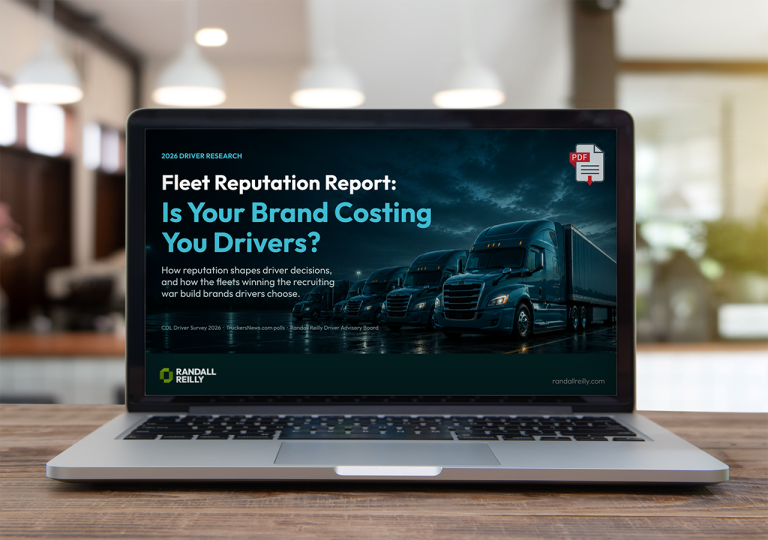
What’s inside the report?
- Why reputation now outranks pay — for the first time in 15 years
- How 62% of drivers build a shortlist before they ever search
- Why 76% walked away after one bad recruiter interaction
- What it actually takes to recover a damaged reputation
All of the data discussed in today’s episode is available in the Drivers & AI Report: Separating Fact from Fiction.
Never Miss a Digging Deeper Discussion
Don’t miss your opportunity to share your thoughts and help steer the chat. Digging Deeper is back every month with a new topic. Dave and his panel will discuss the issues and field any questions our viewers may have. If you want to join us and become part of the discussion you can sign up to be notified when the registration for our next Digging Deeper opens up.
We look forward to you joining and playing an active role in the show!
Full Episode Transcript
Ask most people. What truck drivers care about when choosing a fleet, and they'll probably say the same thing. Hey, but in the latest Fleet Reputation report, reputation overtook pay as the number one factor drivers consider when choosing where to work. Now, that raises a lot of questions.
If reputation matters more, then pay what actually creates a good reputation? Advertising online reviews a great career page. Well, not according to drivers. More than 70% told us they research fleets by talking to other drivers more than every other source combined.
And once those opinions are formed, they can be incredibly difficult to change. Nearly 30% of drivers told us that if a fleet develops a bad reputation, nothing would convince them to reconsider. So what does that mean for recruiting? What does it mean for fleet spending heavily on advertising?
And what does it mean when 76% of drivers say they've decided not to apply because of a bad recruiter or hiring experience? And this episode of Digging Deeper, we're impacting one of the more surprising findings from this year's research. Because if drivers are thinking differently about fleets. It's worth asking whether fleets are still thinking about drivers the same way.
Is your fleet reputation and asset or an obstacle? Let's get started. Live chats open. Tell us what you think.
To digging deeper. This is our. This is about our new research on fleet reputation. We are doing them a little differently.
If you haven't been here in a while, I have our. Okay. Good. Jason, good to hear that you're working.
Now, if you have any difficulties, let us know. We'll try to sort it out for you. And if if it doesn't work, you can always get the recording of this. We will record it.
But we'd rather for the chat. Yes. Normally I'm in the studio, but since we have someone offsite with us today, we have our SVP of Strategy and Marketing us today because we were talking very much about marketing and branding and reputation and what we do about that. We're going to run polls throughout the entire conversation.
We'll also have, as Jason already demonstrated, the audience chat is open. So we want you guys to participate in this as much as possible. Put your opinions. If we say something you don't like, let us know.
We say something you like, let us know. Doesn't matter. Hiss boo. We don't care.
We just want to have a good conversation about what does it mean to have a good reputation as a fleet? How does having a bad reputation affect you from a truck driver recruiting standpoint? And then if you have a reputation that is less than desirable, what are the things we can do to mitigate that? So let's demonstrate the polls real quick.
I have a funny one. I shaved a mustache this morning just to bug my wife. So let's do we're going to launch a poll real quick so that everyone knows how these work. I'm going to add it to the stage just for a second.
We'll see how it's I feel like I get to vote to. All right. We got a few votes. I picked the last one.
If somebody wants to vote in my place, I can't vote as a panelist. Right. No one has said, for the love of everything decent, shave your mustache. So we'll take that as a well.
We're getting a lot of yeses here, so I guess we'll save it. But anyway, you guys get how that works and we'll be launching those throughout. So I think one thing just to and the chats going to we got someone says love the stash. Well thank you.
Let's go ahead and run a real poll. Now, just kind of on the topic of. Fleet reputation, how important is fleet reputation? So we're going to ask the audience, how important do you think fleet reputation is and why thou why that is going?
Julie, why don't you go ahead and tell us kind of what our research revealed and just kind of your first initial thoughts on the entire topic. So the research revealed that for the first time ever in our 15 years of driver interviews, poll surveys, that reputation overtook pay as the most important factor in choosing a fleet to drive for. Which surprised me because I always looked at it as like pay is the default. But on the other hand, it didn't surprise me because when you asked drivers, okay, what's important to you?
They're like, well, pay home time, benefits, equipment quality. But then when I ask them why they left their last job, it's usually about how they were treated. Yeah. Makes that negative experience to spur action.
Do you think I'm trying to think of how to ask this. Do you have any inkling as to. I mean, we know that has changed, and I know when we did our ten years of driver research and looked at the change over time, kind of the the trend that we saw was whereas you kind of the, the lone wolf, I'm, I love the lifestyle and I'm just in it for money has shifted more towards a need for stability. Do you think this is the same idea here?
Is that what we're seeing with this report? Yes. So we're seeing the increase in guaranteed pay. We're seeing increase in regular home time.
We've seen a study decrease in the length of whole past decade. So there's kind of a culmination here. But also we're seeing like a steady increase in social media usage and a bigger sense of driver community. So people talking about the treatment and what's really important to them is really has increased in importance.
At the same time, wages have also increased, but that just becomes table stakes, right? Right. Let's talk about first, I think, you know, we talk about the importance. And if we look at how everyone has voted so far in this, how everyone has voted in this so far besides the mustache one, who cares about that one.
I'm going to add this back to the stage. Just go ahead and vote in this one if you can. We want to know what everyone thinks. How important is fleet reputation?
So far everyone is saying it's everything. So how do we understand? You know, we I think you said your reputation is essentially what drivers say to other drivers about you. Yes.
How do we get how do we get a good indication of you know what, you know what drivers are saying about us? How do we understand if we have a positive reputation or not? How would you say? All right, well, I think there are a lot of great tools that give you your driver sentiment.
I think you could look at turnover, but some turnover is involuntary, right? Where these are not drivers you want to keep or they're retiring. So I don't think that's the best metric. So a lot of people will say like, oh, I have a driver in PS score.
But the real way to see how much drivers are telling good stories about your fleet is to look at your referral rate. We've seen like when people add on referral bonuses, it adds a mild increase or a temporary increase in referrals. But when we pulled drivers, the vast majority said that they would not refer another driver. If they didn't believe in the fleet, which is pretty significant.
Yeah. So I actually I, I it was a couple of years ago probably more like, you know, time is probably more like seven years ago. I ran some research where I pulled about 100 fleets, and I asked them for what their referral bonus was and what the referral rate was and what we found. Now, you would need way more research than what we did.
But just early findings was there was no correlation between referral rate and your full referral bonus, meaning that if you had a big giant referral bonus, that didn't necessarily mean that your referral rate increased. And that was always in the back of my mind. We kind of have done some content around that, but it is really interesting to see drivers actually confirm this idea of, well, really, I'm I'm only going to recommend the fleet to another driver if I really believe in the fleet, like it's not worth the referral bonus if I don't believe in the fleet. Yeah, it's not worth the cost to their reputation.
Right. And now I will say there's probably, like you said, if you already have a good reputation increasing your referral bonus, there's probably a uptick. It's, you know, on the front end of it. But that's not a long term strategy for increasing your referral.
No. About half of drivers have referred another driver to their fleet with no referral bonus. Right? Well, so is there are there any other tools you would mention?
If we're trying to get a gauge of how our reputation is in the market, are there any other things that you would recommend? I mean, you can look at your online reviews. They're not I mean, everybody knows you're going to get your most disgruntled employees leaving reviews, and not that many drivers actually look at reviews. It was a little digit that actually look at them.
You can look at forums and try to run some social sentiment, but honestly, I think referral rate and then branded search volume I think is really helpful because it speaks to the strength of your brand and how often drivers are actually looking for you specifically. And the other would be to look your direct inbound call volume that generally indicates high intent when we pull drivers. When you're serious about a job, what do you do? You call so how many are calling ready to drive.
That means they've already done their research. And as the Fleet Reputation Report talks about, you're on their short list. Okay, Jason had a comment. Yeah.
Go ahead and answer that if you want. Julie. Yeah. So Jason asked.
AI looks at reviews, right? It does. But it also looks at broader context. So it's going to pull in a lot of Reddit discussion.
It'll look at public Facebook comments. It can't look at private reviews. And the other context is it also looks at the overall, what's on a fleet's website, what it lists as their benefits. So we did see a small percentage when we did the poll last month about how drivers use AI.
There's a slightly bigger percentage that would use it to compare fleets, but it's also comparing benefits, home time, and not just online reviews. And even with that, that was a small percentage that used AI to compare fleets compared to the percentage that talked to other drivers. So I would still say, like if you're asking your own drivers how they feel, that's going to give you the biggest indicator of how other drivers are going to experience your reputation by a long shot. But that's a good question.
Yeah. Very good. And keep them coming. So let's shift a little bit.
We've talked about kind of establishing a baseline for our reputation in the market once we discover it. Well before we move on to that sorry, what number if you could pick one number to say, like if someone said, I want to increase improve our reputation, what number would you pick as a measurement tool to measure your increase or decrease over time? To pick one? Yeah.
If you had to pick one, I would pick referral rate. Okay. So but but like you're saying you could probably pick, you know, 4 or 5 and look at it as a kind of you could almost build your own brand health score based off of inbound call volume, search volume, referral rate. There's a lot of things you could kind of put together to kind of measure your overall turnover, things like that okay.
All right. So let's say we look at our reputation and maybe it's good. Maybe it's bad. What would you say.
There's probably before we move on to like backtracking I would say before we say how to improve it, there's probably a fair amount of people that just say we don't really have much of a reputation. People don't know us. So if we're trying to build a reputation and I think we're talking about branding here a little bit and you're the branding expert. So if we're trying to build a brand in the market, what does that look like for fleets?
How would you think is what is the most effective way to go about that? Okay, so we didn't publish this result, these rules because we don't want to hurt anybody ceilings. But when we said do you have a dream fleet to drive for? We actually had a couple people name names, and they're not necessarily the big ones that everybody knows about.
So in this research, we asked, like, what's important to make? What makes a fleet prestigious to drive for what would make them your dream fleet. And it the lowest on the list was a company that everybody recognized. The highest was that it has a reputation for good driver treatment among other drivers.
So they want they don't care if they're just out at the neighborhood barbecue and they say, I drive for X, Y, Z fleet. And everybody goes, oh, I've heard of them. They care if they walk into a shop or a truck stop and they say, hey, I drive for this fleet. Everybody goes, oh, they want to know from other drivers that respect.
So if you're trying to build your brand and say, hey, I want more people to know who I am. So I do make it on that driver short list. You need to make sure your branding is targeted. You can't just do general like, we're going to blanket the landscape with our brand and get every two Wheeler out there for four Wheeler.
I was people on motorcycles. I did do a motorcycle ride recently. It was pretty scary. You need to make sure that you're targeting drivers with your messaging, because that's who drivers care about.
The reputation among both when they drive for you and if they're thinking about driving for you. So you want to work with advertising partners that have a very targeted audience and understand how branding campaigns work differently than lead gen campaigns, and that they run off different metrics. Well, we asked how important is branding to recruiting truck drivers? And so far everyone said it's pretty important.
It's not the most important thing, but it's pretty important. No one has said it's a necessary evil. And so that's probably good. All right.
So let's move on from there. And remember the audience chat is open. Ask your questions. Make your comments boo hiss whatever you want to do.
I don't know how you would hiss in a comment, but anyways. So we talked about how to build a reputation. What do we do to improve a reputation? Well, I think the first thing you do is improve your processes.
So you look at what I've seen a lot of people do is I do. I've seen the show like Undercover Boss. We have to do a day in the life of a driver, and you can start all the way from candidate, all the way to higher, to their first load, to the first time they issues with their truck. What happens after that?
What happens when they don't get as many miles as they thought they're going to get? So their checks a little shorter than they thought. All of those the response times. And then you got to look at the above and beyond.
So how much leeway do your fleet managers or driver managers have to make accommodations for your drivers if they're in a tough spot in terms of like, there is a great example where this driver told the story to every other driver he met. He called his manager and said, hey, I just found out my wife has cancer. And it's like, so I'm going to have to leave. I have to go take care of her.
They gave him an exit bonus and said, don't worry, as soon as you are ready, your job will be here when you get back. And he told everybody, so you have to give. You have to audit the experience and how fast people are responding to drivers and how fast they're responding with human empathy and solutions. Yeah, you know one thing.
Julie was asked, what do you guys suggest to get stories from drivers and then how would we share these stories? So I think this is this actually sets me up to where I want to go. And I'm going to go ahead and launch another poll because it's my favorite thing to do. Well, we don't for slightly longer and add it to the stage.
We talked about kind of driver stories, and I want to ask about driver testimonials specifically. What's. So I want to get your take on this. So and maybe answer Julie West's question inside of this we have research that says that river testimonials or not that effective as far as do drivers look at them and glean much from them.
However, when you combine that, when you juxtapose that with the idea that drivers mostly talk to other drivers to research fleets, what is the why? Why is that? What's the disparity? Because the testimony is essentially hearing from another driver.
Why are those less effective than talking to another driver? Because there is inherent distrust in the application process, right? So if it's just a quote from some driver that they don't know they can't see on your landing page, that's going to have a lot less weight than hearing it from another driver. But there is an in between.
I wouldn't necessarily put this on your landing page because you don't want to distract from the conversion pathway, but if you can get drivers to just use their phones not while driving, but maybe in their truck and just tell a story and record it and let you run ads with it, that would be highly effective. It's authentic. It's real. You don't need a fancy studio.
You don't need to add AI weirdness to it. It's very real and they just tell a real story. That's what drivers are looking for. And then you run that in conjunction with, hey, here's apply now.
And if you have the driver's name and it's recognizable, you can put that testimonial on the landing page to tie that together. And they go, oh, I remember that guy. I saw his video on Instagram and on Facebook. So essentially what you're saying is the key, like driver testimonies can be effective.
They're effective to the degree that you're able to communicate authenticity in them. Yes. And so Polish is almost the enemy of a good driver testimonial. The more scripted, the more polished, the less authentic it seems.
So how do you balance that? Because I know, I know you and you know me, and we're pretty sticklers when it comes to our brand and our brands, even polished and professional. How do you balance making sure your brand is polished and professional with the authenticity of driver testimonials? Well, your brand is what drivers are saying anyway, correct?
So if if they're filming it in their truck and their truck is nice and professional because that's the standard you set for your fleet, then the video is going to look nice and professional because your driver and your truck are. If you are worried about it, having the right logo and this and that on it, you can put a logo on it, but it's just going to make it seem like it's forced. Right. Like, how much did you pay this guy to get it?
So I will say you can. I was looking at the new question here, trying to make sure I got. When you're trying to get these stories from drivers, you would just say, hey, we'd love for you to tell a story just on your phone. You can make it a contest and say, we want true stories and we are going to compile them.
You could do a little montage at the end if you get enough, and you run a bunch of ads with them for like Driver Appreciation Week, and you could tell the stories in real life of all the ways that you have shown your drivers in action. How you appreciate them, I think would be great. But yeah, just ask them, say, hey, tell a story about when we did something right and the winner will. The winner will get a small bonus.
But we want to hear from you whether it's good or bad. I think one of a really powerful one would be for a driver to say, here's where my fleet messed up, and here's how they made it, right? Because drivers know that fleets aren't perfect. They just want to know that you're going to treat them.
Right now, I don't know the answer to this, so I'm hesitant to ask it. But you know, I say don't ask a question you don't know the answer to. Was there any indicator in this research of when fleets had a bad reputation per say, what the main cause of that was, or have we? I know we've done a lot of research in the past, so maybe you can recall research in the past around this.
What do you think is the main driver of a fleet gaining a bad reputation? The biggest is. I'm going back through the polls. For the years it's been pretty consistent issues with equipment, especially if you don't have a loner truck for them to use or if you're doing the split seat where they're getting dirty equipment, they're getting broken down equipment, or there's some reason they can't run the miles that they're supposed to get, so there's nothing they can do and they're not getting enough information back from the shop.
They're not getting an update, and they're not able to make money, and it doesn't feel like anybody cares. That is going to give you a really bad reputation. Another one is if you have dispatchers that are rude or not clearly communicating or are just inflexible, like you have to give a little bit of flexibility because, you know, these are people's lives and they're out on the road. Yes, a lot, but sometimes things are happening at home.
So giving your dispatch training to be empathetic and licensed to give flexibility is a huge bonus if you can. And if not, just making sure that your experience matches the expectation you've set. So if you said, hey, we're going to be real sticklers for this, but we're going to make it up to you here. Like that's how you get a really good reputation for fair driver treatment.
But it generally is dispatch and equipment. I'm going to let you is there anything else within the report that you would want to call attention to while you're doing that? I'm going to go ahead and add the link to the stage. That link will let you download all the research that we're referencing right now.
So please download that. If you're not already, check out the research. Check about what we surveyed. We surveyed a lot of drivers to understand how they feel about fleets, how they make their decisions when they're choosing a fleet.
So a lot of good stuff in there. Julie, was there anything else in the report that really stood out to you that you think would be valuable to our audience today? I think, can I pick two? Sure.
Okay. So the first one is that if you you want to be on the driver's short list, be thinking of that all the time. Like so when you're talking to drivers, I know a lot of recruiters will say, what other fleets are you talking to? But if you're already there, you're on the short list.
So thank them for being on the short list. Figure out what drove them there. Even if you don't close them, then you know you're on their short list, which is a huge one, and you should take that. So remember the branding and the stories that you tell and how you maintain your equipment, your shop responses.
All of that is part of building that reputation that gets you on that coveted short list. The other thing I wanted to point about is how important first interactions are. So I've talked a lot about why drivers leave, and they grumble because they've driven their. But 76% of drivers said that they have walked away from a fleet because of a bad first interaction.
So from the entire company is about the driver experience, right? So your recruiters have to be on the same page. You have to have the bandwidth to be able to answer the phone. You have to have training so that they're not rude or dismissive, because even if they're a driver you don't want to hire, they're still going to go to somebody else and they say, hey, I'm thinking of applying to this fleet.
And they'll say, oh, I called. And they were rude as hell. Yeah. And that might have been the driver you wanted, right?
Yeah, it's a very good interaction. Even the drivers that you don't that don't work for you or any driver you interact with becomes a part of your reputation, whether they work with you or not. Yeah. You know, so even how drivers see your trucks on the road, that it's the entire population of drivers that create your reputation, not just your drivers.
It's a very good point. All right. We're running up. I always try to keep these things to 30 minutes if I can.
And if you guys have any more information or, sorry, any more questions or anything you want to say in the chat, we can keep going. If you guys have any more of that. But I'm going to go ahead and start wrapping us up here. We have to get the fleet Reputation report up here on the link.
So if you have not downloaded that go ahead and download it. Yeah. Up here if we will be back next month with another one next month we are going to be talking about we talked about how drivers use AI. Next month.
We are talking about how fleets use AI. So if you see a survey are an email from us asking you to take a survey, please do so that we can understand how fleets are using AI and we can get all that information to you. And yes, so you can compare what is actually useful and what's going to give you the biggest return, and what's just a pain in the ass to implement without much return. Yep.
All right. Well, I think that's it for everybody. Did I forget anything? Josh, we got Jamie over here, our producer.
All right. I appreciate everybody. We will see you guys next time on Digging Deeper. Thanks for having me.
David. Yep. Thank you.
Explore More Topics with Digging Deeper
Digging Deeper

46:19

28:39